
In a group
Presentation
Slides the facilitator projects to the whole group and that advance at the same time on every participant's screen. For opening the workshop, explaining the next dynamic or closing with conclusions.
Ten activities for a workshop, a team or a group session. You run them live; every participant takes part from their own screen.
Open the activity, share the link or the code, and move from one dynamic to the next when the group is ready.
Each participant adds their cards, votes, draws or answers from their own screen, and sees the board change live.
Talk while you work: a chat beside the board and a video call for groups that are not in the same room.
Everything the group produced, step by step, kept with the activity. In a professional review, an evaluation for each person.
Slides the facilitator projects to the whole group and that advance at the same time on every participant's screen. For opening the workshop, explaining the next dynamic or closing with conclusions.
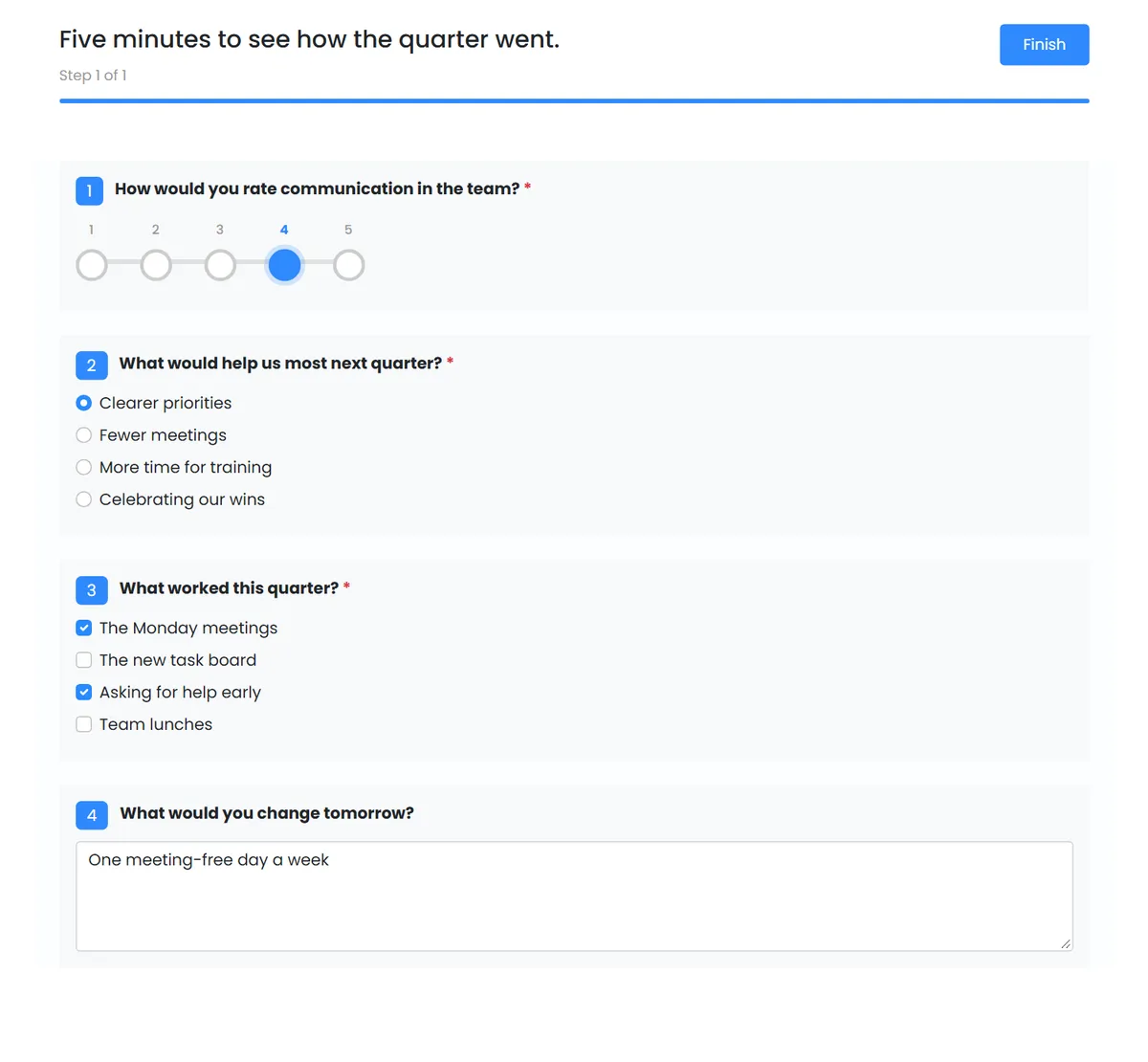
Forms with scale, single or multiple choice, dropdown and free-text questions. Each participant answers from their own screen and the facilitator sees who has finished and what they answered.
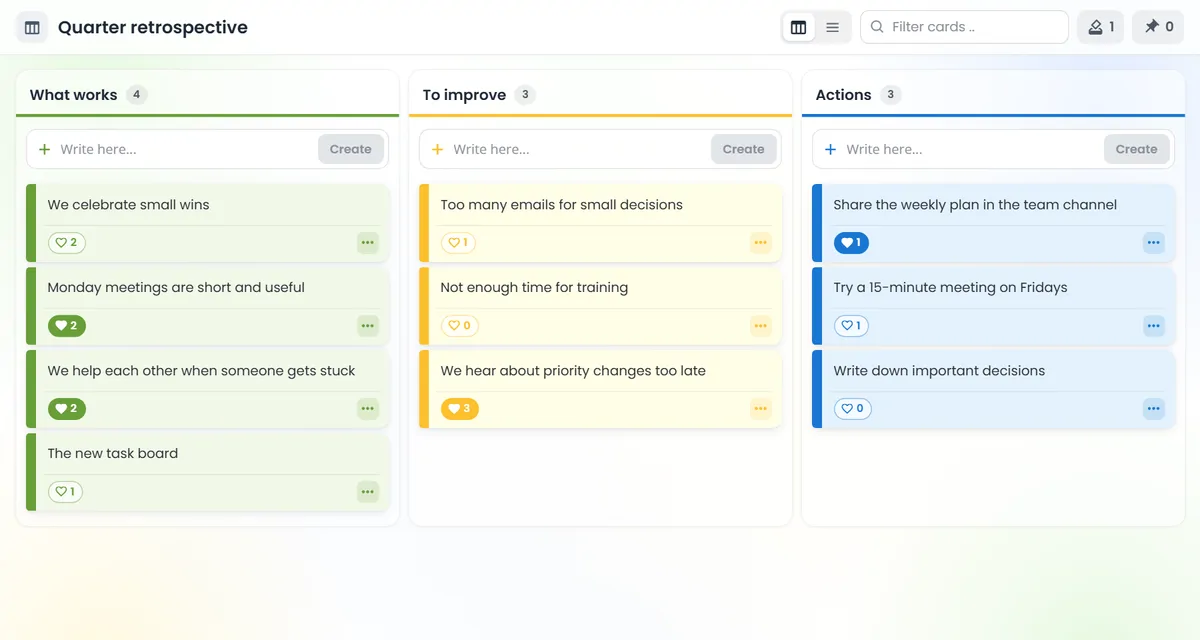
A board in columns (what works, to improve, actions...) where every participant adds cards, votes for them with a "like" and comments on them. Ideal for reviewing a period and agreeing on improvements.
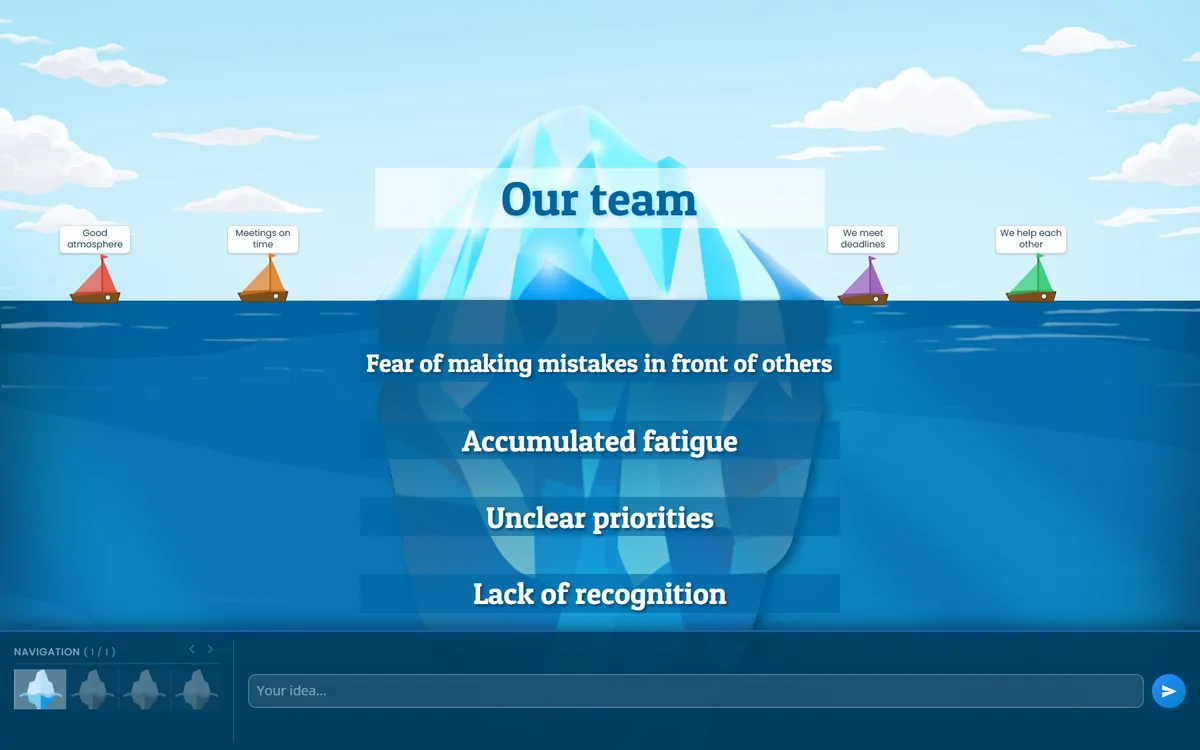
On a shared topic, the group separates what shows above the water from what stays hidden below: fears, beliefs or underlying causes. Ideas arrive sailing on boats and are placed on the iceberg.
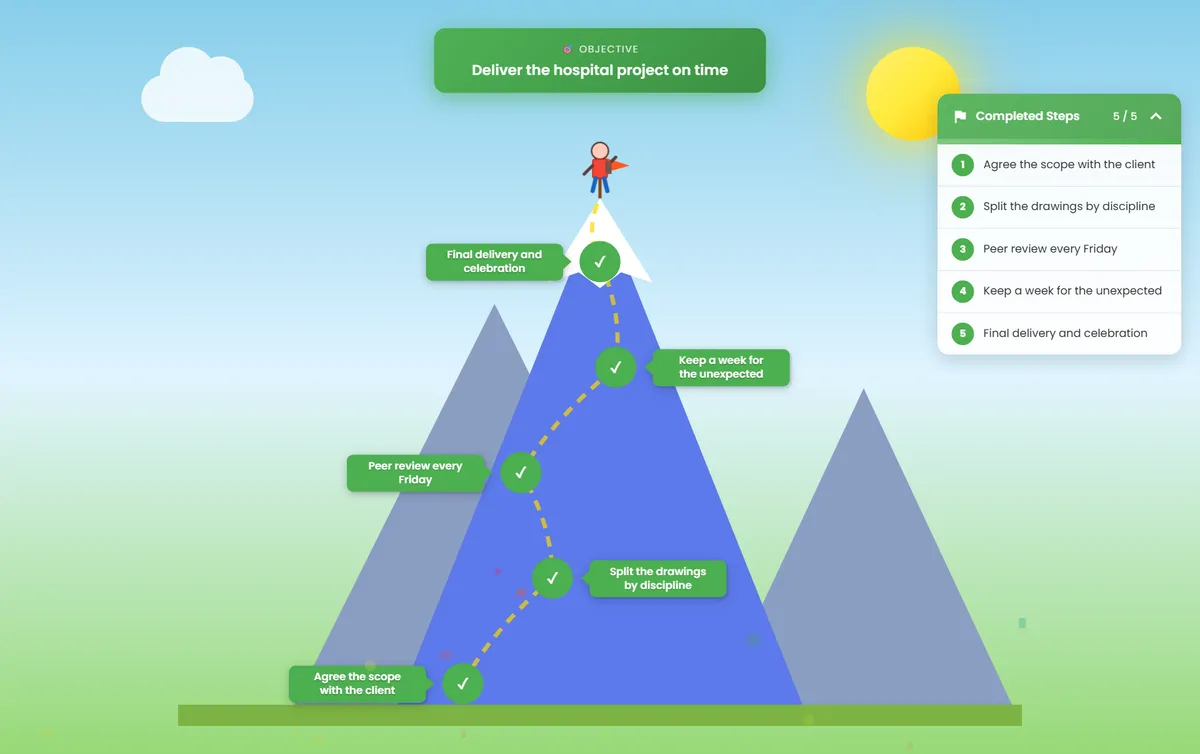
A climb towards a summit that stands for a shared goal. The group proposes ideas and the facilitator turns them into the steps of the way up; the climber rises with each step completed.
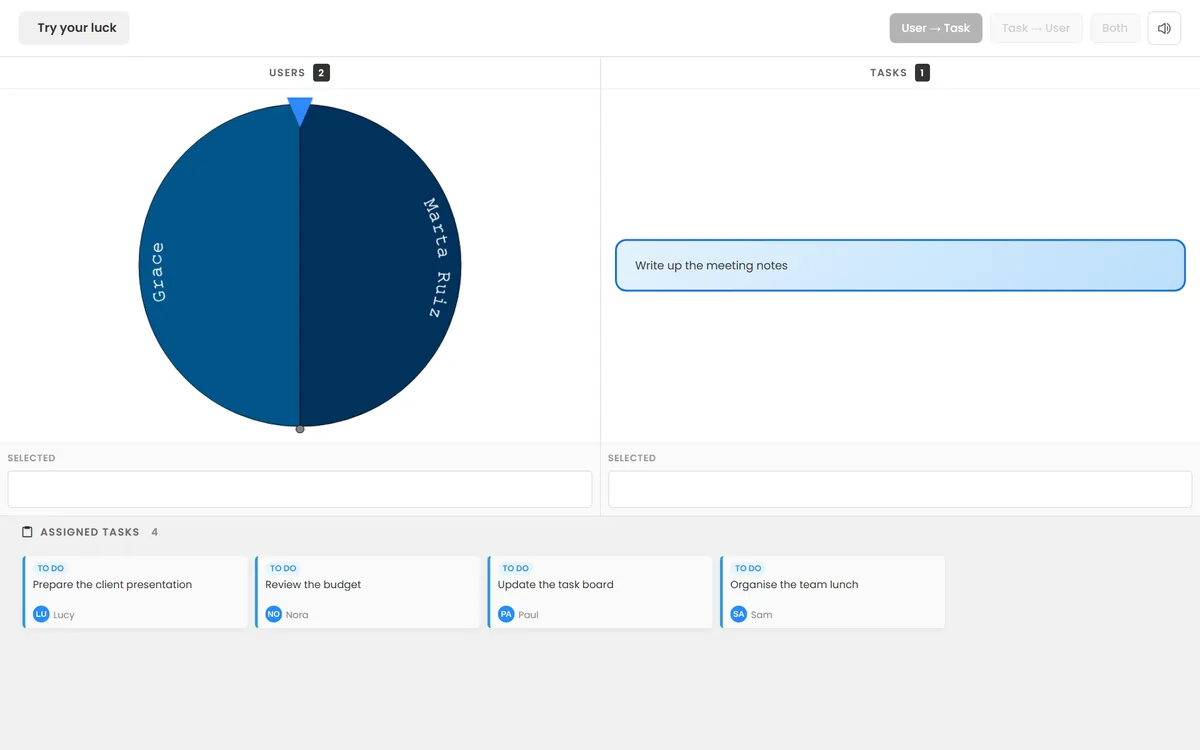
Two wheels, one of people and one of tasks, that hand out the jobs at random and in front of everyone. Each task assigned is recorded with the person responsible.
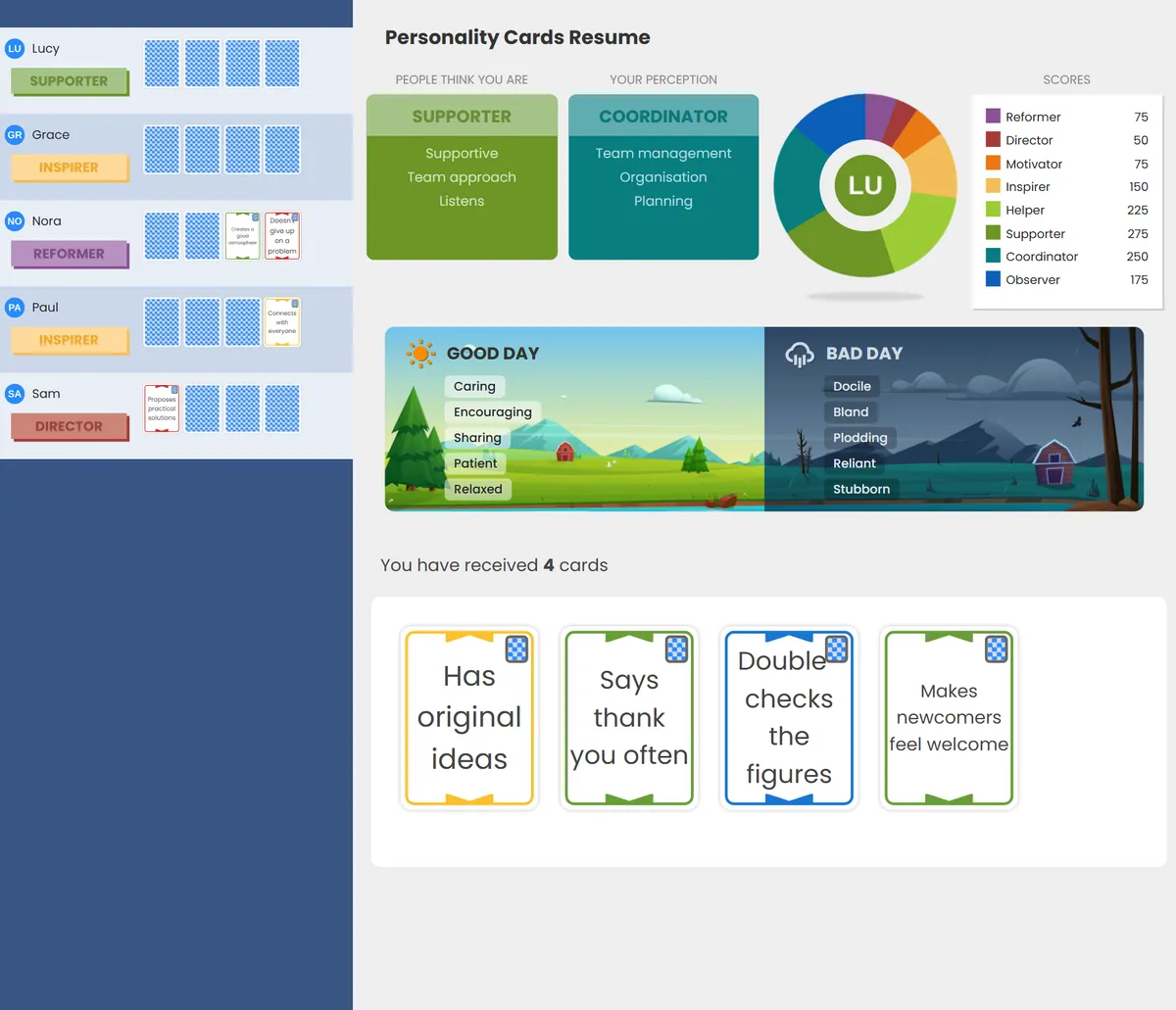
Each participant first chooses the profile they identify with and then deals cards with traits to their colleagues. At the end, how each person sees themselves is compared with how the others see them.
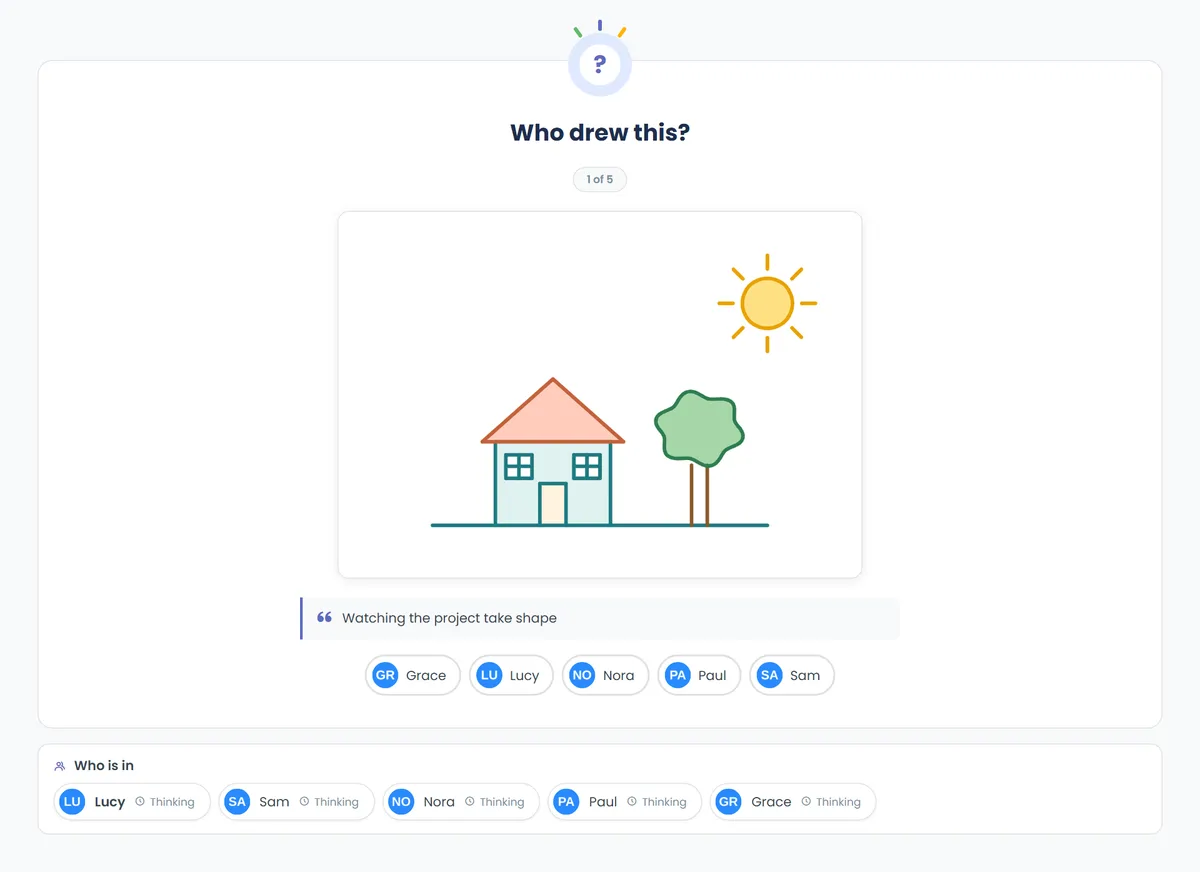
Each person answers a question about themselves and draws it on a canvas. The drawings are then shown without names and the group guesses whose each one is.
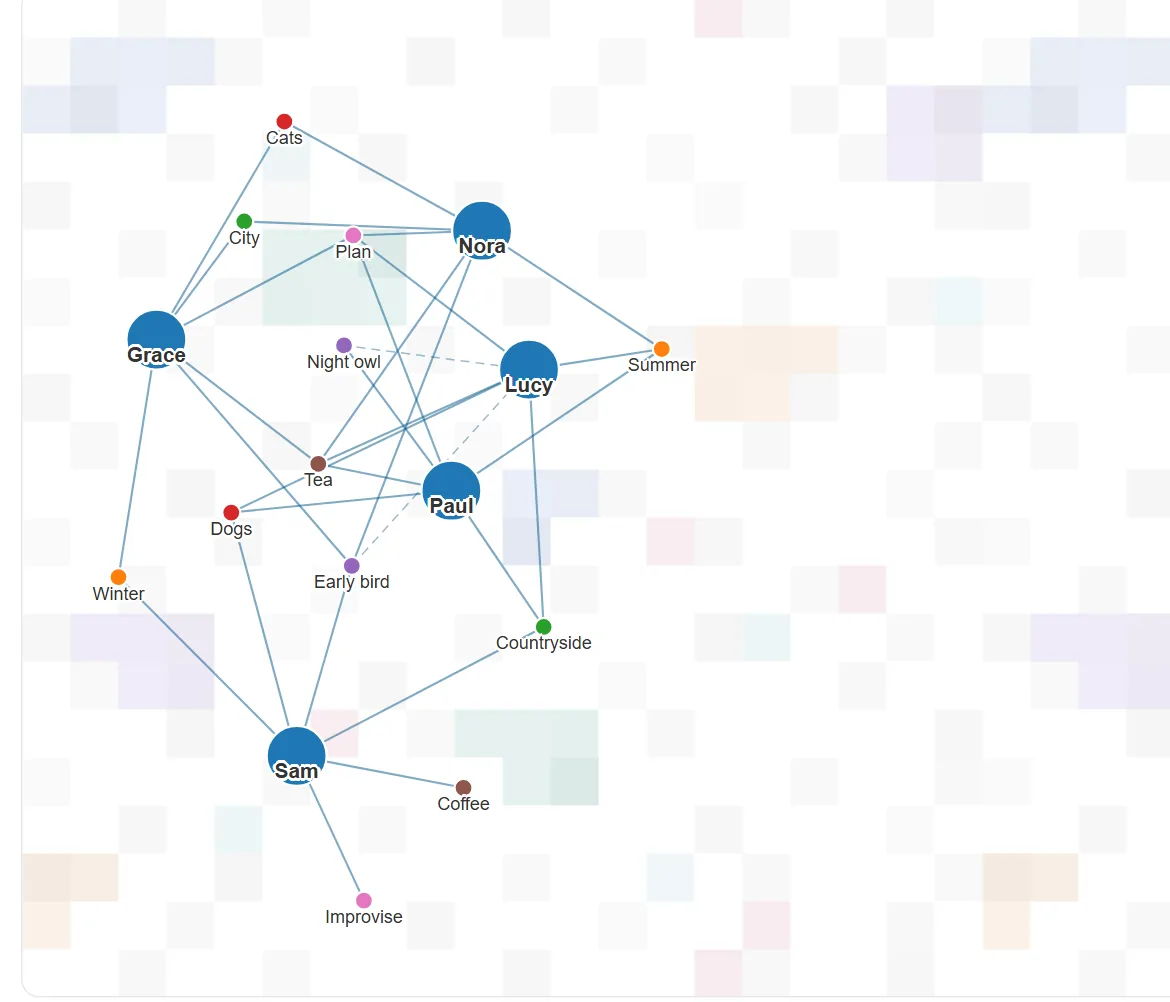
Quick "this or that" questions. Each answer creates a bond and, little by little, a network appears that shows the group's affinities and the topics they have in common.
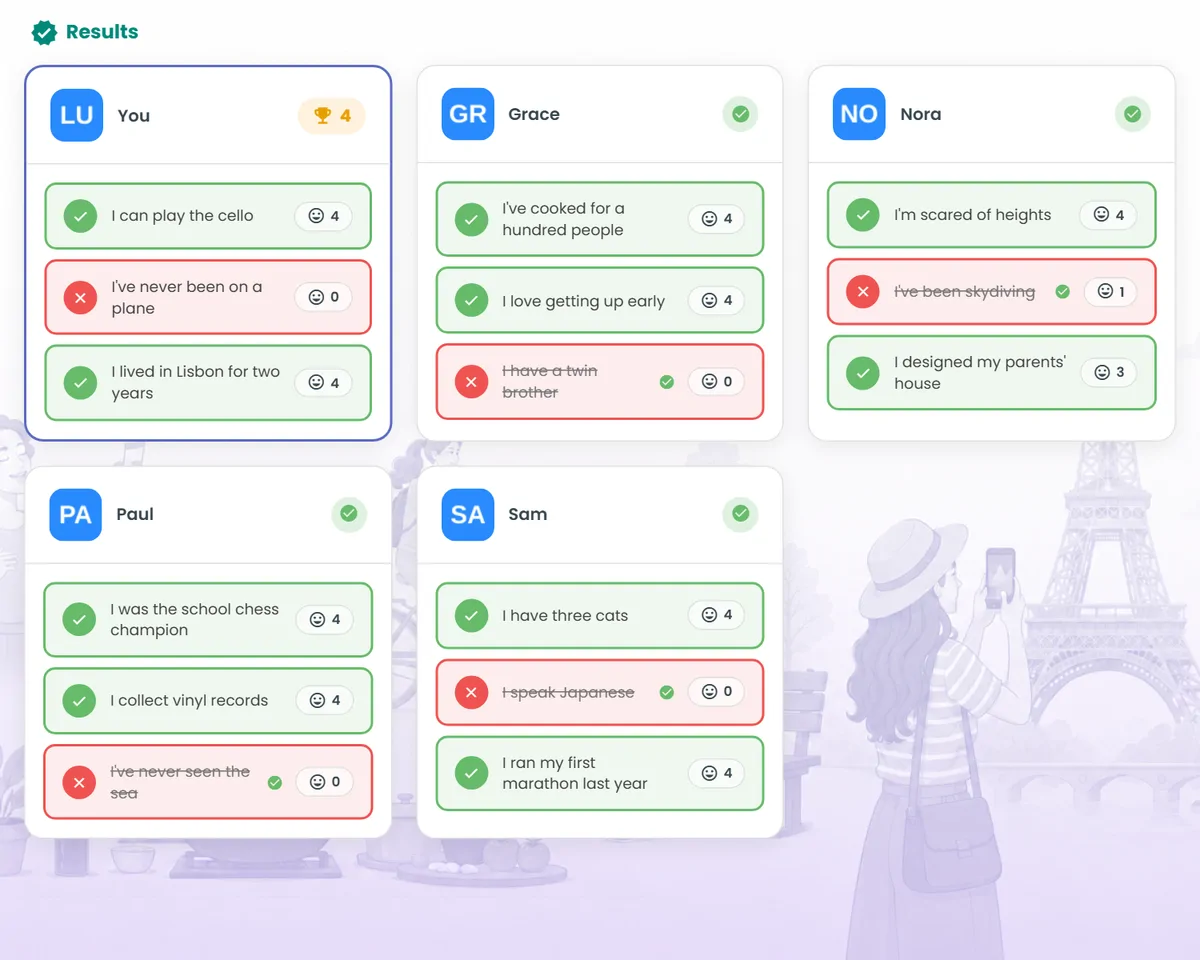
Each participant writes three statements about themselves, one of them false, and the others vote on which they think is the lie. A classic for getting to know each other and breaking the ice.
Create a free account, pick a dynamic and invite your group with a link.
Start for free